
Quick Answer
Topical metformin is an emerging, off-label approach being studied for acne vulgaris. In a 2023 placebo-controlled study, topical metformin 30% gel used once nightly for 12 weeks was associated with reductions in comedones, papules, and nodules. However, clinical evidence remains limited, and larger studies are needed to determine its effectiveness, long-term safety, and optimal formulation.
Key Takeaways
Topical metformin for acne vulgaris is an emerging area of dermatology research.
A 2023 study of metformin 30% gel reported improvement in comedonal, papular, and nodular acne compared with placebo.
Researchers are studying metformin’s potential effects on sebum production, insulin and IGF-1 signaling, androgen activity, and inflammation.
The studied regimen used 30% metformin gel once nightly for 12 weeks, but this is not an established universal dosing standard.
Topical metformin is not FDA-approved for acne, and compounded formulations require an individualized prescription from a licensed prescriber.
Topical Metformin for Acne Vulgaris: Research, Benefits, and Treatment Considerations Abstract
Acne vulgaris is a common inflammatory skin condition influenced by excess sebum production, follicular plugging, inflammation, and hormonal and metabolic factors. Topical metformin is an emerging treatment approach supported by a 2023 placebo-controlled study in women, which found reductions in comedones, papules, and nodules following treatment with 30% metformin gel. Additional research on oral metformin suggests that its effects on insulin-related signaling, androgen activity, and lipid synthesis may be relevant to acne management. Although promising, topical metformin remains an investigational, off-label approach with limited clinical evidence. This article reviews its proposed mechanism, studied dosing, clinical outcomes, and practical considerations for patient-specific compounded preparations.
What Is Acne Vulgaris?
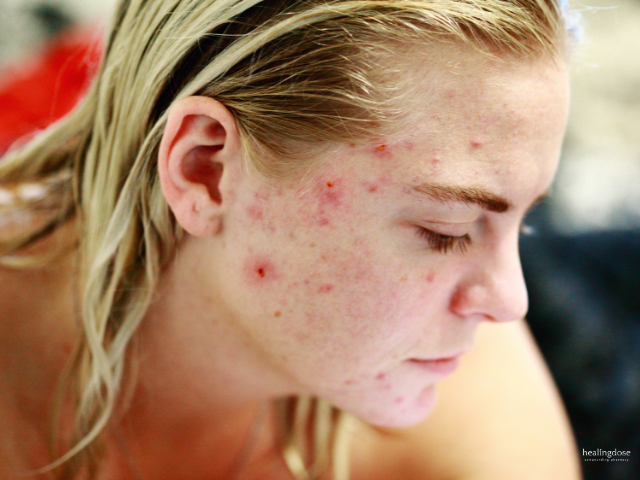
Acne vulgaris is a chronic inflammatory disorder of the pilosebaceous unit—the hair follicle and its associated sebaceous gland. It commonly presents as blackheads, whiteheads, inflammatory papules, pustules, and, in more severe cases, nodules.
Acne develops through several interconnected processes: excess sebum production, abnormal shedding of follicular cells, proliferation of Cutibacterium acnes, and inflammation. Hormonal signaling and insulin-like growth factor 1 (IGF-1) can also influence sebaceous gland activity and contribute to acne development.
Conventional treatments include topical retinoids, benzoyl peroxide, topical antibiotics, and selected systemic therapies. However, treatment tolerability, contraindications, and incomplete responses can create a need for additional options.
How Does Topical Metformin Work for Acne?
Metformin is a biguanide medication traditionally used to manage type 2 diabetes. Its potential dermatologic applications have attracted interest because of its effects on metabolic and cellular signaling pathways.
Proposed mechanisms relevant to acne include:
- Sebum and lipid regulation: Metformin may influence pathways involved in sebaceous lipid production.
- Insulin and IGF-1 signaling: These pathways can affect sebocyte activity and follicular keratinization.
- Androgen-related effects: Research involving oral metformin suggests that changes in androgen activity may contribute to acne improvement.
- Cellular signaling: Activation of AMP-activated protein kinase (AMPK) and modulation of pathways such as mTOR may influence cellular metabolism and inflammation.
The precise mechanism of topical metformin in acne has not been established. These mechanisms are biologically plausible, but they should not be interpreted as proven effects of a topical preparation.
What Does the Clinical Research Show?
1. Topical metformin 30% gel: A 2023 clinical study
El-Komy and colleagues evaluated topical metformin in a split-face, placebo-controlled study involving women with acne vulgaris. Participants applied metformin 30% gel to one side of the face and placebo gel to the other for 12 weeks.
The investigators reported significant improvements in comedonal, papular, and nodular lesions on the metformin-treated side compared with placebo. Pustule counts did not show a significant difference.
No adverse effects were reported during the study. However, lesion counts increased after treatment was discontinued, suggesting that continued treatment may be necessary to maintain improvement.
The study provides preliminary clinical support for topical metformin, but its small sample size and limited follow-up mean that larger, longer-term trials are needed.
2. Oral metformin: Supporting evidence
In a 2023 observational study, Kamboj and colleagues treated 30 patients with acne who did not have polycystic ovary syndrome (PCOS) using oral metformin 1,000 mg daily for three months.
The researchers observed a significant improvement in acne severity, alongside changes in androgen-related measures and the expression of genes involved in lipid synthesis. Because this was an observational study of oral treatment, the findings cannot establish the efficacy of topical metformin.
3. Metformin and PCOS-associated acne
A systematic review and meta-analysis by Yen and colleagues examined metformin therapy for acne in patients with PCOS. This literature supports interest in addressing metabolic and hormonal contributors to acne, particularly in patients with PCOS. However, systemic treatment evidence should not be assumed to establish the effectiveness of topical metformin.
Topical Metformin Dosing and Application
The published acne study provides a starting point for prescriber consideration:
| Treatment Parameter | Published Study |
|---|---|
| Concentration | Metformin 30% gel |
| Application frequency | Once nightly |
| Treatment duration | 12 weeks |
| Evaluation | Baseline and follow-up assessments |
| Follow-up after treatment | 4 weeks |
The study used a split-face design, applying metformin to one side of the face and placebo to the other. Its regimen should not be considered a universally established dosing standard.
For an individual patient, the prescriber should determine the appropriate concentration, formulation, application frequency, treatment area, and duration. The published findings do not establish whether lower concentrations would be equally effective or whether maintenance treatment is necessary.
Patient Instructions: Use, Storage, and Handling
Patients using a compounded topical metformin preparation should follow the dispensing label and the prescriber’s instructions.
- Application: Apply the prescribed amount to clean, dry skin. Avoid contact with the eyes, lips, and mucous membranes unless specifically directed.
- Consistency: Use the medication at the prescribed frequency. Do not increase the amount or frequency to accelerate results.
- Skin irritation: Report persistent redness, burning, itching, or worsening irritation to the prescriber.
- Storage: Follow the pharmacy’s labeled storage instructions. Keep the container tightly closed and away from excessive heat, moisture, and direct sunlight unless otherwise directed.
- Handling: Keep out of reach of children. Do not share the medication with others, and observe the beyond-use date on the label.
Because compounded formulations may differ in their vehicles and physical characteristics, storage conditions and beyond-use dates should be specific to the dispensed preparation.
How Healing Dose Compounding Pharmacy Can Help
Healing Dose Compounding Pharmacy can work with prescribers to prepare patient-specific topical metformin formulations when a prescription is appropriate and the preparation is permitted under applicable compounding requirements.
Compounding offers prescribers an opportunity to specify the concentration, dosage form, vehicle, and quantity based on the patient’s individual needs. A suitable topical vehicle is important because it influences application characteristics, drug release, and the patient’s experience using the medication.
Prescribers interested in topical metformin for acne can discuss formulation options with Healing Dose Compounding Pharmacy, including the intended treatment area, desired dosage form, and practical application considerations.
Topical metformin is not an FDA-approved acne treatment, and compounded medications are not FDA-approved. The prescriber and patient should discuss the preliminary nature of the evidence, potential risks, and established treatment alternatives before beginning therapy.
Frequently Asked Questions About Topical Metformin for Acne
Does topical metformin help acne?
A small 2023 clinical study found that 30% metformin gel improved comedones, papules, and nodules compared with placebo. Further clinical trials are needed to confirm these findings.
What concentration of topical metformin has been studied for acne?
A 30% gel was evaluated in a 12-week, split-face, placebo-controlled study. Other concentrations have not been established as equivalent for acne treatment.
How often is topical metformin applied?
The published regimen used once-nightly application for 12 weeks. Individual treatment instructions should be determined by the prescriber.
Can topical metformin be used for hormonal acne?
Its proposed metabolic and androgen-related mechanisms make it a subject of interest, but clinical evidence specifically establishing its effectiveness for hormonal acne remains limited.
Is topical metformin FDA-approved for acne?
No. Topical metformin for acne is an off-label, compounded treatment approach, and its effectiveness and long-term safety require further study.
References:
- El-Komy MHM, Abdo NMK, Shamma RN, Bedair NI. Topical metformin 30% gel in the treatment of acne vulgaris in women: A split face, placebo-controlled study. Experimental Dermatology. 2023;32(10):1663–1673. Link
- Kamboj P, et al. Effects of metformin on clinical, hormonal and relevant gene expression parameters in patients with acne: An observational study. Clinical and Experimental Dermatology. 2023;48(6):617–622. Link
- Okoro OE, Camera E, Flori E, Ottaviani M. Insulin and the sebaceous gland function. Frontiers in Physiology. 2023;14:1252972. Link
- Yen H, Chang Y-T, Yee F-J, Huang Y-C. Metformin therapy for acne in patients with polycystic ovary syndrome: A systematic review and meta-analysis. American Journal of Clinical Dermatology. 2021;22(1):11–23. Link
- Saleh HM, Masood S, Schlessinger J. Acne vulgaris. StatPearls. StatPearls Publishing. 2026. NCBI Bookshelf