Veterinary Compounding Pharmacy
A sick pet or companion animal faces some of the same struggles humans do when ill.
Sometimes the exact medicine required to treat that illness is not available commercially in the right combination, the right dosage, or in a form, the patient can or is willing to tolerate.
Healing Dose Compounding Pharmacy works with veterinarians to provide medications to pets and companion animals. Each compounded medication is specifically tailored to address their health concern, unlike generalized conventional veterinary medicine.
As with human patients, the process by which these medications are created follows strict guidelines for quality and safety. This includes following United States Pharmacopeia (USP) guidelines for compounded medications.
Custom Dosages
Animals vary widely in size and metabolism. A cat may require a different strength or concentration than a dog, and a small dog may need something different from a large breed. Commercial medications often come in limited strengths, but custom veterinary medication may provide flexibility.
Flavor Enhancements
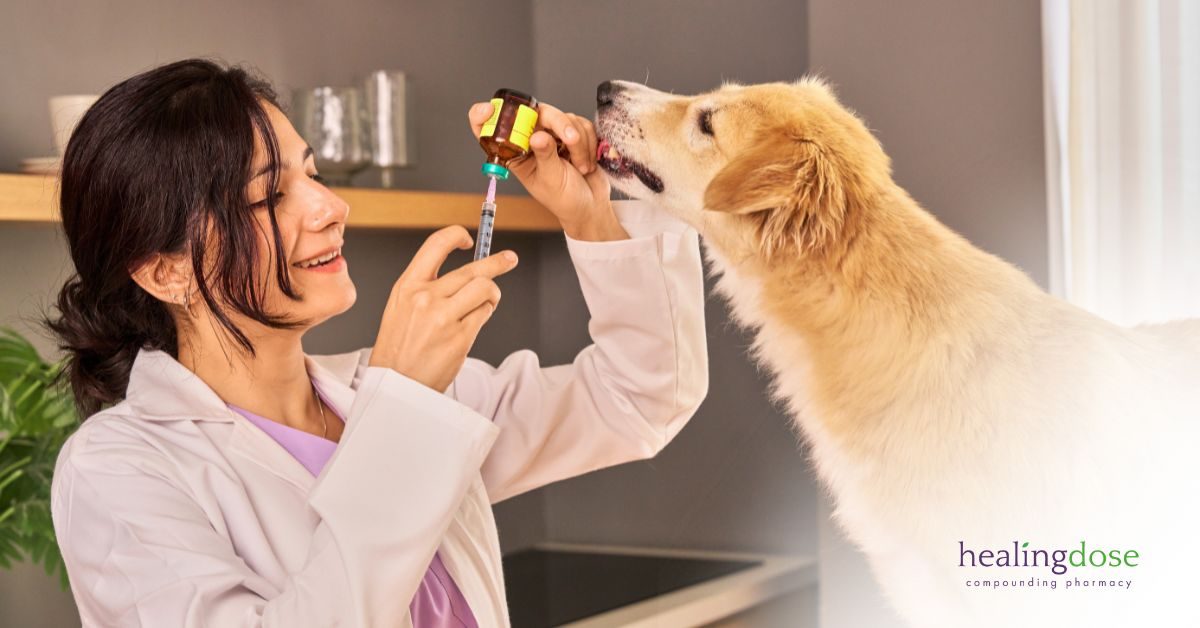
Flavor can significantly influence an animal’s participation in “medicine time.” Compounded medications can be flavored — such as chicken, beef, or fish — to make administration more manageable for pet owners.
Alternative Forms
Not all animals can swallow pills. Pharmacists may compound medications in various forms, including liquids, topical gels, or transdermal creams, depending on what may be easier for the animal and its caregiver.
Ingredient Exclusion
In cases of sensitivity or allergies, a veterinarian may request that certain inactive ingredients be omitted. Compounding may allow for customization of the formulation.
Helping Veterinarians and Pet Owners
How does a veterinary compounding pharmacy help veterinarians and pet owners?
Any pet owner will confirm how difficult it can be to get an animal to take the required medicine. A compounding pharmacist not only can provide the exact combinations of medications required but can also provide them in a form that is more acceptable to the animal patient. This can include adding flavors, taking what is only commercially available in pill form, and creating a good-tasting suspension more easily tolerated by the pet.
Healing Dose Compounding Pharmacy in Farmington Hills, Michigan works with your furry baby’s veterinarian to find the right medication for the best possible outcome. We make meds for all types of animals, birds, reptiles, cats, dogs, zoo animals, etc.
Common Conditions on Veterinary Care
- GI motility disorders in dogs and cats
- Hyperthyroidism
- Allergies
- Auto-immune disorders
- Canine and Feline Epilepsy
Dosage forms commonly used for pet medication
- Transdermal gels or creams
- Oral Capsules
- Flavored suspensions
Compounded medication commonly used in veterinary cases
- Cisapride
- Prednisolone
- Methimazole
- Metronidazole
- Potassium Bromide
Veterinary Low Dose Naltrexone (LDN) for Dogs with Cancer
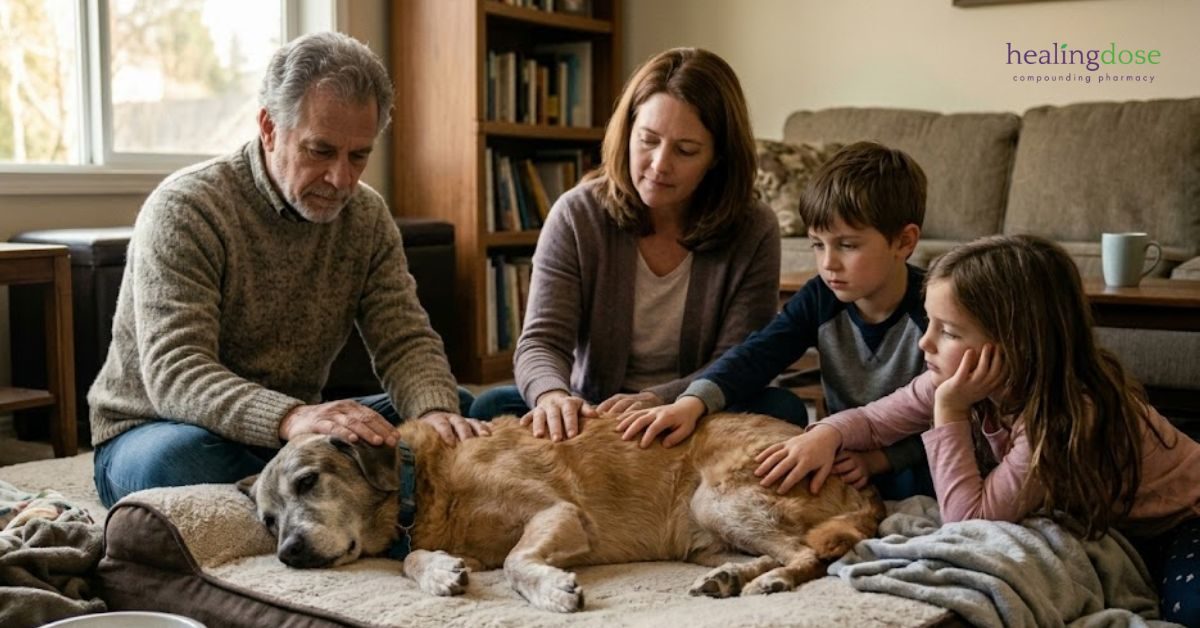
Low dose naltrexone (LDN) is gaining attention in veterinary medicine as researchers and veterinarians explore its role in supportive and palliative care for dogs with cancer. Recent veterinary case series have discussed compounded oral LDN in relation to quality-of-life support, including areas such as comfort, appetite, mobility, and overall wellbeing.
Because pets often require customized strengths and dosage forms, compounded LDN may provide veterinarians with more flexible prescribing options tailored to individual patient needs.
Read our latest educational blog to learn more about veterinary low dose naltrexone, current canine cancer research, and how compounded LDN is being discussed in veterinary oncology.
Related Blogs
Veterinary Low Dose Naltrexone Compounded for Dogs with Cancer