Summary & Key Takeaways
A recent case series published in the International Journal of Pharmaceutical Compounding reviewed oral low-dose naltrexone, or LDN, as part of palliative care for dogs with cancer. The study followed dogs with different cancer diagnoses and found that compounded oral LDN was well tolerated, with owners reporting maintained or improved quality of life in areas such as comfort, appetite, mobility, hydration, and mental status.
Key takeaways:
- LDN is not a cancer cure, but it may be considered by veterinarians as part of a broader palliative care plan.
- Compounded LDN allows veterinarians to prescribe patient-specific strengths and dosage forms.
- In the case series, no adverse events were reported.
- Veterinary LDN should only be used under the direction of a licensed veterinarian, especially if the pet is taking pain medication or other cancer therapies.
What Pet Owners and Veterinarians Should Know
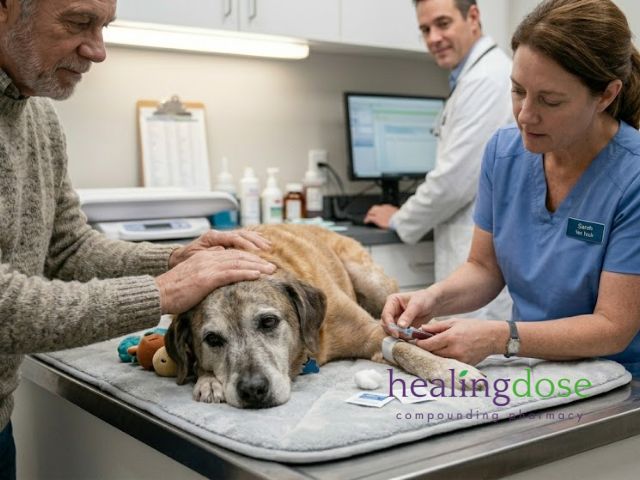
When a dog is diagnosed with cancer, families often have one major goal: keeping their pet as comfortable, happy, and engaged as possible for as long as possible.
Cancer care in veterinary medicine may include surgery, chemotherapy, radiation, pain control, appetite support, and palliative care. Increasingly, veterinarians are also exploring supportive options that may help preserve quality of life during treatment.
One option receiving more attention is veterinary low dose naltrexone, often called LDN.
A recent case series in the International Journal of Pharmaceutical Compounding looked at dogs with cancer who received oral compounded low-dose naltrexone as part of their palliative care plan. The results were encouraging, especially in areas that matter most to pet owners: comfort, appetite, mobility, hydration, alertness, and overall quality of life.
“Oral compounded LDN may be a valuable palliative care option in veterinary oncology.”
Source: International Journal of Pharmaceutical Compounding
At Healing Dose Compounding Pharmacy in Michigan, we understand how important customized veterinary medications can be. Many pets cannot take standard commercial medications easily, and many veterinary patients need strengths, flavors, or dosage forms that are not commercially available. That is where veterinary compounding may help.
What Is Low Dose Naltrexone?
Naltrexone is a medication that has been used in human medicine for decades. At standard doses, it is most commonly known for its role in opioid and alcohol use disorder therapy. However, at much lower doses, naltrexone has been studied and prescribed off-label for a variety of conditions.
Low dose naltrexone generally refers to small, customized doses that are much lower than standard commercial naltrexone tablets. In people, LDN is often discussed in the context of immune modulation, chronic pain, inflammation, and certain complex conditions. In veterinary medicine, LDN is still an emerging area, and dosing must be guided by a veterinarian.
The article explains that LDN may influence opioid receptor pathways, endorphin activity, and immune-related signaling. These mechanisms are part of why veterinarians and researchers are interested in LDN as a supportive option in cancer care.
Why Are Veterinarians Looking at LDN for Dogs with Cancer?
Cancer in dogs can affect much more than tumor size or lab results. It can change a pet’s energy level, appetite, comfort, mobility, mood, sleep, and interaction with family members.
That is why palliative care is so important.
Palliative care does not mean “giving up.” It means focusing on comfort, dignity, symptom support, and quality of life. For some dogs, palliative care is used alongside chemotherapy, radiation, or surgery. For others, it may become the main focus of care.
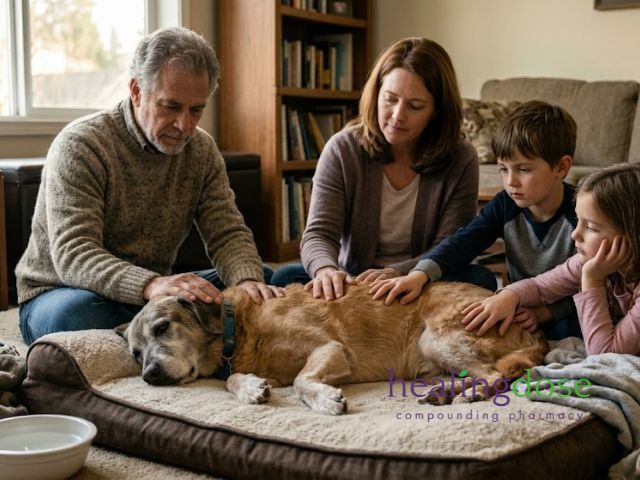
The case series reviewed dogs with several types of cancer, including hepatocellular carcinoma, T-cell lymphoma, osteosarcoma, and multilobular osteochondrosarcoma. The dogs received oral compounded LDN along with their standard veterinary care. Owners completed quality-of-life questionnaires throughout the study, tracking areas such as happiness, pain, appetite, hydration, hygiene, mobility, mental status, and general health.
The study reported improvements or stability in several quality-of-life areas. While this was a small case series and not a large clinical trial, the findings suggest that LDN may be a useful supportive option for veterinarians to consider.
What Did the LDN + Cancer in Dogs Case Series Find?
The study initially enrolled seven male neutered dogs. Four dogs were included in the final evaluation. Each dog received either 2-mg or 4.5-mg compounded naltrexone capsules, depending on body weight. Dosing began once daily for 30 days, then increased to twice daily for the remainder of the three-month study if tolerated.
Owners reported maintained or improved quality of life in several areas, including:
- Happiness and engagement
- Mental alertness
- Pain control
- Appetite
- Hydration
- Mobility
- General health perception
The article also noted that the dogs tolerated compounded oral LDN well. The pet owners reported no adverse events in this case series.
This does not mean LDN works the same for every dog. It also does not mean LDN should replace cancer treatment, pain control, or veterinary oncology care. Rather, it suggests that veterinary low dose naltrexone may be worth discussing as part of a larger comfort-focused care plan.
Additional Veterinary Research on LDN and Canine Cancer
Interest in veterinary low dose naltrexone continues to grow as more researchers explore its potential role in supportive cancer care for dogs.
The recent International Journal of Pharmaceutical Compounding case series referenced earlier research published in PLOS ONE by Machado et al. In that study, researchers evaluated naltrexone used alongside carboplatin chemotherapy in dogs with mammary carcinoma.
The study found a significant association between naltrexone use and improved quality of life and prolonged survival in canine cancer patients.
“The use of low-dose naltrexone associated with carboplatin chemotherapy increased the survival time and improved quality of life in dogs with mammary carcinoma.”
Source: PLOS ONE
These findings help support continued investigation into compounded LDN as a possible supportive option in veterinary oncology.
Why Compounding Matters for Veterinary LDN
Commercial producers of naltrexone do not typically make it in the small, pet-specific strengths needed for low-dose veterinary use. A standard human tablet is often far too strong for small animals and cannot be accurately split into precise low doses.
A compounding pharmacy can prepare naltrexone in customized strengths prescribed by a veterinarian. This may help improve dosing accuracy and administration.
For dogs, pharmacists often compound LDN as capsules. Capsules may be given whole or opened and mixed with food if the veterinarian approves. The article noted that pet owners commonly prefer capsules for dogs because they are practical, stable, and easier for many owners to administer compared to other dosage forms.
Depending on the patient and prescription, a veterinary compounding pharmacy may be able to prepare LDN in different strengths or forms to better match the animal’s size and needs.
Possible Veterinary LDN Dosing Considerations
The article included weight-based daily dosing recommendations adapted from LDN Research Trust guidance. Examples included 1 mg for pets under 10 pounds, 2 mg for pets 10 to 25 pounds, 3 mg for pets 26 to 35 pounds, 4 mg for pets 36 to 50 pounds, and 4.5 mg for pets over 50 pounds.
These are not instructions for pet owners to dose at home. They are general research-based reference points. Only a licensed veterinarian can determine whether LDN is appropriate and what dose is right for a specific pet.
A dog’s diagnosis, weight, current medications, pain level, liver function, appetite, cancer treatment plan, and overall health all matter.
When Should Veterinarians Consider Veterinary Low Dose Naltrexone?
The article’s authors suggested that LDN may be especially useful when incorporated early in the cancer diagnosis process to help preserve quality of life throughout treatment. They also noted that more research is needed to better understand ideal timing, dosing frequency, objective clinical markers, and long-term outcomes.
Veterinarians may consider discussing LDN when a patient needs additional palliative support and when the medication profile is appropriate. It may be especially relevant for dogs where maintaining comfort, appetite, mobility, and engagement is a priority.
For veterinary oncologists, integrative veterinarians, general practitioners, and hospice-focused veterinary teams, compounded LDN may be one more tool to consider in personalized patient care.
Michigan Veterinary Compounding Pharmacy for LDN
Healing Dose Compounding Pharmacy works with prescribers to prepare customized medications for patients who need options not available commercially. For veterinary patients, that often means adjusting strength, dosage form, flavor, or administration method to make treatment more practical.
For dogs with cancer, every detail matters. A medication that is easier to administer may reduce stress for both the pet and the owner. A precise compounded strength may help the veterinary team follow a more individualized care plan.
Healing Dose Compounding Pharmacy is located in Michigan and serves patients and prescribers looking for professional, personalized compounding support. Prescription medications require a valid prescription from a licensed provider.
Questions Pet Owners Can Ask Their Veterinarian
If your dog has cancer and you are interested in veterinary low dose naltrexone, ask your veterinarian:
- Could LDN be appropriate for my dog’s diagnosis and current care plan?
- Would LDN interfere with any pain medications or cancer treatments?
- What signs should I monitor at home?
- How will we measure quality of life?
- What dosage form would be easiest for my dog?
- How often should my dog be reassessed?
These questions can help guide a thoughtful conversation and ensure LDN is considered safely.
Overview: Compounded LDN for Dogs with Cancer
Veterinary low dose naltrexone is an emerging supportive option in palliative cancer care for dogs. The recent case series found that compounded oral LDN was well tolerated and was associated with maintained or improved quality-of-life scores in several dogs with cancer.
More research is needed, but the findings are meaningful for veterinarians and pet owners looking for ways to support comfort and daily function during a difficult diagnosis.
For Michigan veterinarians and pet owners, Healing Dose Compounding Pharmacy can help prepare veterinarian-prescribed compounded medications tailored to the needs of each patient.
To learn more about veterinary low dose naltrexone compounding, contact Healing Dose Compounding Pharmacy or ask your veterinarian whether compounded LDN may be appropriate for your dog’s care plan.
References
- Garza, M. A., Hoffart, S., Parsons-Doherty, M., Clark, D. H., Banov, F., & Carvalho, M. (2026). Case Series of Veterinary Cancer Patients Treated with Oral Low-Dose Naltrexone. International Journal of Pharmaceutical Compounding, 30(1), 12–21. Link
- Machado, M. C., da Costa-Neto, J. M., Portela, R. D., D’Assis, M. J. M. H., Martins-Filho, O. A., Barrouin-Melo, S. M., … & Estrela-Lima, A. (2018). The effect of naltrexone as a carboplatin chemotherapy-associated drug on the immune response, quality of life and survival of dogs with mammary carcinoma. PLoS One, 13(10), e0204830. Link